



Adapted from a part of Pyotr Tchaikovsky’s Romeo and Juliet by Larry Clinton, Buddy Bernier and Bob Emmerich; arranged by Andy Phillips.
Recorded by Bunny Berigan and His Orchestra on September 20, 1939 in Boston. (*)
Bunny Berigan, trumpet; directing: Jake Koven, first trumpet; Truman Quigley and Carl “Bama” Warwick, trumpets; Mark Pasco and Al Jennings, trombones; Charlie DiMaggio, first alto saxophone; Joe DiMaggio, alto saxophone and clarinet; Stuart Anderson and Larry Walsh, tenor saxophones; (Walsh doubled on baritone saxophone); Edwin “Buddy” Koss, piano; Tommy Moore, guitar; Morty Stulmaker, bass; Paul Collins, drums; Danny Richards, vocal.
(*) It is uncertain exactly where in the Boston area this recording was made. The Berigan band opened at the Totem Pole Ballroom, at Norumbega Park, Route 30, Auburndale, Massachusetts on Wednesday September 20, 1939. It is possible that the recordings they made that day (seven in all, some incomplete), were a sound check for the radio broadcast they did over radio station WOR that night.
The story:


The tragicomic series of events that had unfolded in Chicago during the first eleven days of August 1939 were beginning to be reported, in bits and pieces, in the music trade press as the month progressed. In essence, Bunny Berigan, with his father, William P. “Cap” Berigan, acting as his personal manager and road manager for the Berigan band, had been spectacularly unsuccessful in balancing the band’s expenses with its income over the previous few months. Bills that had been incurred prior to Cap Berigan taking over had gone unpaid for many months, and gradually, especially during the Berigan band’s seven-weeks stay at the Panther Room of Hotel Sherman in Chicago,(*) the salaries of the musicians in the Berigan band were being paid in smaller and smaller parts, and finally not at all, because of lack of funds. The band’s income was not exceeding its expenses. It was not even equal to those expenses.


It appears that the first garnishment of Berigan’s earnings came while the band was at the Panther Room. This was to pay a judgment in favor of the Greyhound Bus corporation for several hundred dollars for services rendered in the last months of 1938. The reaction of Bunny and Cap to this was to at first to secure a loan or loans from MCA (Music Corporation of America), the booking agency that represented the Berigan band. It appears that those loans, by mid-August, totaled $1,500.00. At some point, MCA turned off the loan spigot, and Bunny secured a loan of $568.00 from a New York finance company. Then, he was served with a summons in a lawsuit brought by Wanamaker’s department store in New York for merchandise Donna, Bunny’s wife, bought there for herself and the two Berigan daughters. The Wanamaker bill totaled several hundred dollars. The bills and other expenses kept coming in, but Bunny’s earnings from the Panther Room gig simply were not enough to cover his current expenses, much less these other expenses.
In addition, there was a muddle created when Bunny fired his original personal manager, Arthur Michaud, in either late 1938 or early 1939. It appears that immediately after this occurred, Bunny turned to John Gluskin for personal management, and signed a contract with him. What he didn’t do was to terminate his contract with Michaud in proper legal fashion before he signed with Gluskin. Consequently, he was tied contractually to two personal managers simultaneously. And both were claiming commissions based on a percentage of all money earned by the Berigan band. That is one reason why Bunny pressed Cap Berigan into service as his personal manager in May of 1939. He knew he needed a personal manager, but was already paying two of them who were doing no work on his behalf. Bunny’s manager muddle continued until he filed for bankruptcy relief at the end of August 1939.


By the time all of this was falling-in on Bunny during the Panther Room engagement, he and/or Cap Berigan came to the conclusion that the solution to at least a part of the problem, his band’s unpaid wages, could be found through the local Chicago Musicians’ Union. This led to the bizarre meeting of the entire Berigan band, including Bunny, with the man who was then the president of the Chicago local, James C. Petrillo. It is not known precisely or completely what the result of that meeting was insofar in getting Berigan’s band members paid. But, according to Berigan band member Gus Bivona, who was present, Petrillo “…gave Bunny a telling-off using all the four letter words imaginable…” It is likely that in response, Bunny, who was definitely not a hot-head, may have used a few four letter words of his own. Petrillo, enraged, then imposed a fine on Berigan of $1,000.00 for “conduct unbecoming a member of the American Federation of Musicians.”(1)
Bunny Berigan really needed the services of a good lawyer from the time he began to organize a big band in early 1937. He apparently didn’t understand the extent to which anyone who leads a big band is a business person, in addition to being the band’s musical leader. He trusted others who were clearly in positions of conflict of interest with him to look out for his business interests. He had no comprehension of the concept of trust, but verify. He trusted, but did not verify, and often had no one else to verify for him. By the time he was presented with verification of the facts in his business life in July and August of 1939, he was buried in debt and legal complications.


Paradoxically, that the very time when Berigan’s financial health was at a nadir, his playing and that of his band were at a remarkably high level. His booking agency, MCA, was undoubtedly aware of Bunny’s financial difficulties. Nevertheless, they took no steps for the seven weeks the Berigan band was playing at the Panther Room, (presumably for either break-even money, or at a loss), to ameliorate those difficulties. If the Berigan band had been presented for week at a Chicago theater in July or August of 1939, the resulting cash-flow would have undoubtedly alleviated much of the immediate financial pressure on Bunny. One can speculate that the band’s many radio broadcasts from the Panther Room would have ensured a profitable theater run. This was MCA’s most basic promotional tactic, one that had worked successfully for myriad bands. Instead, Bunny was left to be sucked deeper and deeper into a quagmire of debt while he and his band remained at Hotel Sherman.
In the wake of the Petrillo fiasco, someone at MCA finally took steps to try to stabilize the finances of the Berigan band. This happened only because after the Petrillo meeting, Bunny contacted his MCA liaison and told him that he was very near to breaking-up his band, and seeking some sort of bankruptcy relief to get out from under his debts and manager tangle. Indeed, several of his band members were now talking about leaving simply because they could no longer work every day and not be paid. Someone from MCA intervened, met with Berigan and his band in Chicago, and promised them that a lucrative theater engagement had been secured for them at the Loew’s State Theater in Manhattan, to take place in the last week of August, and that the money Bunny owed his sidemen would be paid up in full at the end of that engagement. Consequently, everyone in the band agreed to remain until after that theater engagement had been completed. To tide the Berigan bandsmen over until then, MCA may have furnished them with eating money (borrowed by Bunny, with interest), but nothing more.
Then the MCA liaison talked with Berigan privately. Bunny was reminded of the incident the previous summer, when he fell off the stage at the Stanley Theater in Pittsburgh. After that, MCA was not sure that he could handle a week-long engagement at a major theater because of his drinking. He could not do anything during the Loew’s State engagement, he was told, that would reflect negatively on him, or on MCA. This increased the pressure on Berigan to drink less in a situation where he very much wanted to drink more. That was a non-issue for MCA. MCA, as usual, was acting solely in its financial interests. They continued to reap commissions from every gig the Berigan band played, even though for some time Bunny himself and his musicians had not been paid. MCA very much wanted the Berigan band to continue to operate, because it was a solid, swinging band, and had always been a steady commission generator. Bunny promised to work through the Loew’s State engagement without any alcohol related problems. Somehow, he managed to to that.


Between the end of the Panther Room engagement on August 11, and the Berigan band’s opening for a week at the Loew’s State Theater on Times Square in Manhattan on August 24, they bounced around playing one-night gigs in the Midwest, working their way back to New York. The music trade papers were not sanguine about Berigan’s chances for success at the State Theater engagement: “The vaude bill this week is not so hot, and combined with a weak film, …will probably do only so-so business. Bunny Berigan’s band is on the stage throughout, with Berigan emceeing and then highlighting the band’s music some of his brilliant trumpeting. He and his 13 men snap out sharp swing-style rhythms. Their music is in the better swing class, but has a tendency to get monotonous before the show is finished. Tenor Danny Richards steps out for vocals, drawing generous applause.”(2) Featured on the bill with Berigan was singer Maxine Sullivan, in addition to a number of vaudeville performers.


The predictions were wrong – the engagement was a success: “Bunny Berigan gave the State Theater in New York City its best gross in weeks with $25,000.00.”(3)
At the end of the engagement, all of Bunny’s musicians were paid their back wages. Indeed, they also received bonuses from Bunny for their work in making the theater gig a success. Immediately after that Gus Bivona, Don Lodice, Joe Bushkin, Johnny Napton and Joe Bauer left. Berigan himself finally took steps to file a bankruptcy petition in Manhattan to obtain relief from his remaining debts and other legal entanglements. Future prospects for the Berigan band, with its personnel now depleted by almost half, including several key performers, were uncertain.
It is my informed speculation that at the end of the Loew’s State engagement, Bunny Berigan was depressed, exhausted, insolvent and disgusted with how MCA was procuring work for him and his band. Although he still very much wanted to continue leading his band, he realized that in order to do so he would have to fill the massive hole in it created by the recent departure of five of its members. He nevertheless was not as enthusiastic about doing that as he had been in the past, because he had just experienced events that had turned his normally optimistic attitude about leading a band to one of resigned cynicism. Berigan really needed the services of a strong personal manager at that moment. But since he had presumably just been freed of his connections with his last two personal managers as a result of his bankruptcy filing, he was not eager to hire another manager then. Consequently, he and his father continued to operate the business side of the Berigan band by themselves.


As one would expect, this resulted in exactly the same depression, exhaustion and insolvency for Bunny six months later. But by the end of 1939, there was an even more ominous development: Bunny’s vigorous good health and legendary stamina were now being undermined by the disease of cirrhosis of the liver, which sent him to the hospital around Christmas of 1939. He was hospitalized and away from his band for at least two weeks as 1939 ended and 1940 began.
As September of 1939 began, a new person at MCA, Harry Moss, was assigned to be the agency liaison with Bunny Berigan. Berigan was well acquainted with Moss, having worked with him in early 1937 when he was a booking agent for Associated Radio Artists. Moss booked the fledgling Berigan band then on a few gigs. Harry Moss appears to have genuinely liked Berigan. Nevertheless, Moss, like all MCA operatives, was always under intense pressure to manage MCA clients in a way that maximized MCA’s commissions. The prime consideration for MCA was the generation of commissions. All other issues, no matter how dire for the client, were subsidiary. It appears that Bunny met with Harry Moss at MCA’s posh Manhattan offices in the Squibb Building on Fifth Avenue a number of times during the first couple of weeks of September. I suspect that Moss’s approach with Bunny was to reassure him that MCA had lined-up weeks of good work for the Berigan band, and that Bunny could call Moss directly anytime he needed to. This appears to have mollified Bunny. George T. Simon, a writer at Metronome magazine then, encountered Berigan coming out of the MCA offices at that time. Here is how he remembered the encounter: “That recent bankruptcy trouble hasn’t worried him noticeably.” (4)


Whatever the case, Berigan in his usual efficient fashion, began auditioning and hiring musicians to take the places of those who had recently left his band. Soon they were integrated into the Berigan ensemble, and began playing the gigs Harry Moss told Bunny MCA had secured for them. For MCA, the Berigan situation had been stabilized. Commissions generated by the Berigan band continued to roll in, uninterrupted. For Bunny however, the situation that had forced him into bankruptcy was essentially unchanged. Although some of his debts apparently were discharged in the bankruptcy (principally his debts and legal obligations to Michaud and Gluskin), others, particularly the “fine” Petrillo had levied on him, and his debt to MCA, remained. He simply took whatever work MCA provided, and without a personal manager to do the math and make sure that the band’s income exceeded expenses, soon income was once again not exceeding expenses. Bunny and Cap were oblivious. The band was working, doing good business overall and playing well. So was Bunny. Bunny and the band forged ahead. With no management of the band’s income happening, he was once again slowly being submerged in debt.
The music: “Our Love,” based on a theme from Tchaikovsky’s Romeo and Juliet, entered the pop music world in March of 1939. Several bands recorded it then, including Jimmy Dorsey’s (with a vocal by Bob Eberly); Red Nichols’s (with a vocal by Bill Darnell); and Tommy Dorsey’s (with a vocal by Jack Leonard). Glenn Miller had an arrangement on it which he broadcast (with a vocal by Ray Eberle). Bunny Berigan liked the music of Tchaikovsky, and had a number of recordings of Tchaikovsky’s music in his record collection. He assigned the song to his staff arranger Andy Phillips in June of 1939, and by July the Berigan band was performing it before audiences at the Panther Room of Hotel Sherman in Chicago. Phillips’s arrangement is a well-constructed showcase for the velvety, low-register, melodic Berigan trumpet, and the singing of Danny Richards. It was well-received wherever it was performed, and is perfect for dancing. If Berigan had had a contract to make records after his contract with Victor expired in mid-March of 1939, he undoubtedly would have recorded this arrangement.

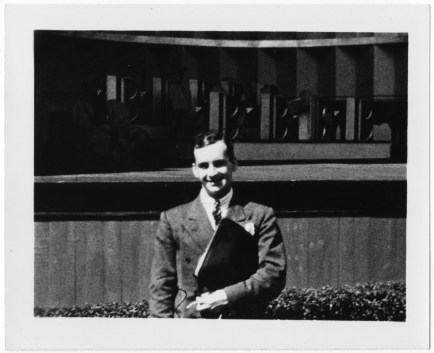
Beneath the surface of this arrangement we find evidence that Andy Phillips, like Joe Lippman before him, benefitted from his musical association with Bunny Berigan. Listen for example to how he deploys the reeds and cup-muted brass behind Bunny’s sixteen bar melody exposition in the first chorus. The reeds sing while the brass add gently rhythmic emphases. This complements what Berigan is doing very well. The brass at first play the secondary melody on the tune’s bridge, and then the reeds return, with a bit of Larry Walsh’s solo tenor saxophone, to sing out the primary melody to finish chorus one.
The modulation that follows is brief and efficient, with Joe DiMaggio’s clarinet prominent.


The second chorus belongs to Danny Richards (real name: Donato Ricciardi). He had a warm tenor voice with good range, a fine sense of pitch, and a relaxed delivery, all of which he used with great skill. He was very popular with audiences who came to see and hear Bunny Berigan’s band. For a number of reasons that had nothing to do with him, he was unable to make commercial recordings with the Berigan band through 1939. Had he done so, the trajectory of his career may well have been more high-profile.(5)
It is amazing how quickly Berigan integrated the new musicians into a cohesive performing unit. This performance, given only a couple of weeks after five new musicians joined, is very good all the way around.
The recording presented with this post was digitally transferred and remastered by Mike Zirpolo.
Notes and links:
(*) Normally, Berigan as a bandleader, was on tour more or less constantly, and thus kept out of the reach of process servers. While he was at Hotel Sherman, the frequent radio broadcasts he appeared on specified where he was and how long he was going to be there. His creditors noticed. Consequently, process servers descended on him during that engagement.
(1) The Miracle Man of Swing …A Bio-Discography of Jazz Trumpeter Bunny Berigan, by Bozy White (2012), 1041-1042.
(2) Ibid. 1044. This quote comes from Billboard, September 2, 1939.
(3) Ibid. 1045. This quote comes from the September 1939 International Musician.
(4) Metronome, October 1939.
(5) In 1940 when Bunny Berigan was working with Tommy Dorsey’s band, Tommy fired Frank Sinatra for the first time. When TD was looking for a replacement, Berigan recommended Danny Richards, and TD called him. Danny balked, probably being intimidated by TD, and never sang with Dorsey. This undoubtedly was a missed opportunity that Richards long regretted.